Brent & WTI — Market drivers | H2 March 2026 (EN)
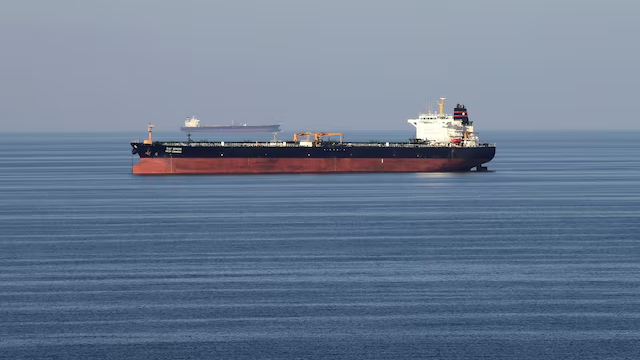
Over the past 15 days, Brent and WTI were driven less by “headline supply” and more by the pricing of delivered availability: the market’s core question shifted to whether marginal barrels could physically reach end-markets at acceptable cost and risk.
This post applies a systematic macro-energy framework used by professional oil market analysts to explain what actually moved prices — not what made headlines.
It focuses on physical fundamentals, financial and geopolitical effects, and crucially mechanisms, timing, and price impact.
🔴 MAJEURS — STRUCTURELS / DOMINANTS
Ce sont les forces qui fixent les prix. Si elles changent, le récit change.
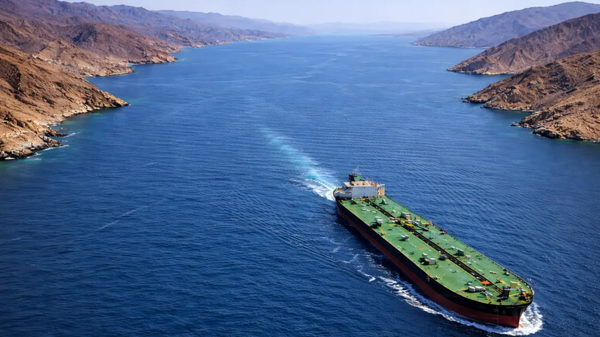
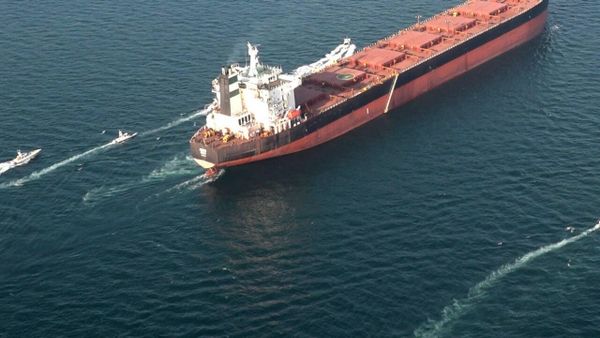
1) Strait of Hormuz deliverability shock and forced Middle East shut-ins
- Category: Geopolitics | Logistics
- Mechanism: The effective closure of the primary Gulf export chokepoint repriced “delivered” crude and products rather than “produced” volumes, because marginal barrels became constrained by transit risk, vessel availability, insurance, and the ability to physically move flows; as storage filled and bypass capacity proved limited, producers curtailed output, tightening prompt supply and steepening time spreads as the market paid to secure near-term barrels.
- Region: Middle East chokepoint with global benchmark transmission
- Time horizon: Short-term
- Price impact: Bullish
- Character: Conjunctural
Key signal: IEA cites Strait flows plunging from ~20 mb/d pre-war to a “trickle” and Gulf production cut by at least 10 mb/d, while Brent front-to-6-month backwardation widened to about $10 (tight prompt, duration-risk concentrated up front).
🟠 SIGNIFICATIFS — CONDITIONNELS / DE SOUTIEN
Ils influencent les prix à la marge ou temporairement, sans renverser le narratif dominant.
2) Coordinated emergency stock release and inventory buffer, with distribution frictions
- Category: Stocks | Policy
- Mechanism: Large, coordinated SPR/emergency stock releases increase available barrels on paper and reduce tail risk, but the price impact is capped when logistics, quality, and timing prevent released barrels from substituting for disrupted Gulf grades and products in the right basins; the response dampens longer-dated risk more than prompt deliverability tightness.
- Region: OECD/IEA system with global balancing impact
- Time horizon: Short-term
- Price impact: Bearish
- Character: Temporary
Key signal: IEA agreed to make 400 mb available from emergency reserves, including a stated U.S. SPR release plan of 172 mb.
3) Refining and product-market dislocation led by diesel/jet tightness
- Category: Refining | Products
- Mechanism: Disrupted Middle East product exports and refinery outages tighten middle distillates, lifting cracks and pulling crude values higher via refinery demand for incremental feedstock and inventory restocking; the stress concentrates in diesel/jet because these barrels are import-dependent in Europe/Asia and harder to replace quickly.
- Region: Europe and Asia import basins with global spillover
- Time horizon: Short-term
- Price impact: Bullish
- Character: Conjunctural
Key signal: Reuters reports Asia jet and gasoil cracks surging to multi-year highs (jet margin above $52/bbl; 10ppm gasoil crack just above $48/bbl).
4) OPEC+ policy response and spare-capacity optics (small increments vs large disruptions)
- Category: Supply | Policy
- Mechanism: A modest OPEC+ output increase and selective rerouting (where available) signals willingness to respond, but incremental barrels are small relative to the disruption scale and are constrained by export-route availability and limited spare capacity outside a narrow set of core producers.
- Region: OPEC+ (global), concentrated in the Gulf
- Time horizon: Short-term
- Price impact: Bearish
- Character: Conjunctural
Key signal: OPEC+ agreed an April increase of 206 kb/d, while Aramco indicated a major shift of exports via Yanbu to bypass Hormuz constraints.
🟡 SECONDARY DRIVERS — AMPLIFIERS / NOISE
These affect volatility, timing, or regional distortions, but rarely direction.
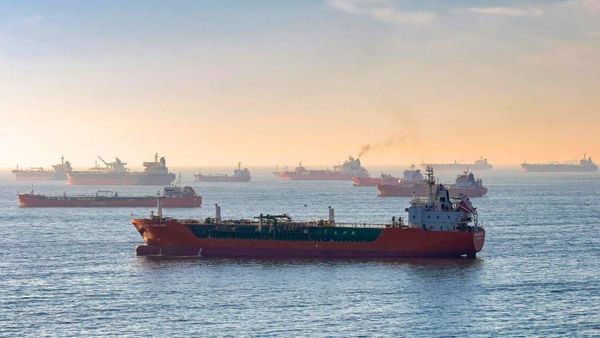
5) Freight, war-risk insurance, and ton-mile inflation in tanker markets
- Category: Logistics | Finance
- Mechanism: Higher freight and war-risk premia raise delivered crude costs and widen regional dislocations (especially Atlantic Basin vs Asia), strengthening prompt benchmark sensitivity to shipping headlines without changing the underlying driver of constrained transit capacity.
- Region: Global seaborne (MEG, Red Sea routes, Asia/Europe discharge)
- Time horizon: Short-term
- Price impact: Bullish
- Character: Temporary
Key signal: Reported VLCC fixtures above ~$400k/day and indications of ~$460k/day to secure VLCCs on stressed routes.
6) Derivatives microstructure: front-end volatility, skew, and liquidity-driven whipsaws
- Category: Finance | Market structure
- Mechanism: Concentrated front-end hedging demand and dealer gamma positioning amplify intraday moves and headline sensitivity; the curve expresses the shock primarily through prompt backwardation and near-dated implied volatility rather than a uniform repricing of the strip.
- Region: ICE Brent / NYMEX WTI paper markets with global transmission
- Time horizon: Short-term
- Price impact: Neutral
- Character: Temporary
Key signal: Brent 30-day implied volatility spiked to ~68% and front-month open interest rebounded to >700k contracts by March 2 after a late-Feb unwind.
7) Policy/headline timing risk: ad-hoc trade easing and “false prints” around transit status
- Category: Policy | Data timing
- Mechanism: Temporary administrative measures and misinformation around transit events move prices by shifting perceived friction rather than underlying supply; corrections reverse quickly when physical verification reasserts itself.
- Region: Global (Russia flows, Gulf transit)
- Time horizon: Short-term
- Price impact: Neutral
- Character: Temporary
Key signal: Reuters describes a price swing on an erroneous report of a tanker transiting Hormuz, and a time-limited U.S. license to reduce friction around Russian barrels stranded at sea.
Bottom line:
The last 15 days were priced primarily as a deliverability shock: Hormuz disruption forced real logistics friction and effective Gulf shut-ins, which tightened prompt availability and steepened time spreads.
Sell-offs repeatedly failed when they were triggered by “reopening” narratives that did not translate into verified flow normalization, while rallies persisted when physical constraints showed up in spreads, freight, and product cracks.
The narrative shifts only with demonstrable restoration of transit/exports at scale or a substitution pathway that reliably replaces disrupted Gulf flows in the right regions and qualities, with stocks acting as a cushion rather than a cure.
Sources: Reuters; International Energy Agency (Oil Market Report, 12 Mar 2026); U.S. EIA Weekly Petroleum Status Report; Financial Times; Windward; Seatrade Maritime.
This analysis captures the visible drivers of oil prices. What it only touches on are the less observable dynamics: physical flow reallocations, Atlantic–Asia arbitrage shifts, freight-rate signals, crack-spread leading indicators, and conditional scenario analysis.
A deeper version of this analysis — including full scenario mapping and structural implications — is available in the "Deep-dive oil market analysis", designed for professionals who want to go beyond headlines. Sources: Reuters; Bloomberg; Financial Times; Wall Street Journal; U.S. EIA Weekly Petroleum Status Report; IEA Oil Market Report.