Brent & WTI — Market drivers | H2 January 2026 (EN)

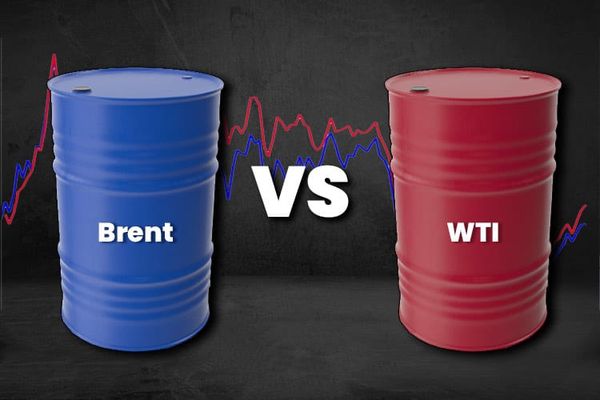
Over the past 15 days, oil has been driven less by headlines than by the mechanics of how the barrel clears: forward balance expectations, inventory trajectory, benchmark differentials, and a Brent-specific risk premium. This note ranks the true price-setting forces behind Brent and WTI, separating structural drivers from conditional support factors and short-term noise.
This post applies a systematic macro-energy framework used by professional oil market analysts to explain what actually moved prices — not what made headlines.
It focuses on physical fundamentals, financial and geopolitical effects, and crucially mechanisms, timing, and price impact.
🔴 MAJOR DRIVERS — STRUCTURAL / DOMINANT
These are price-setting forces. If they change, the narrative changes.
1) Persistent “surplus-first” balance framing (supply growth > demand absorption)
- Category: Supply | Stocks
- Mechanism: When the market internalizes that incremental supply is running ahead of incremental demand, the price-setting variable becomes inventory trajectory and time-spread compression, forcing prompt crude to clear through weaker flat price and/or softer backwardation. OPEC+ holding policy steady into Q1 preserves the near-term supply path, while non-OPEC growth expectations keep the market anchored to “stocks build unless something breaks.”
- Region: Global
- Time horizon: Medium-term
- Price impact: Bearish
- Character: Structural
Key signal: Market attention converging on surplus/stock-build language in major wires and agency balance updates, rather than on marginal headline disruptions.
2) Venezuela flow normalization shock reshaping Atlantic Basin differentials (WTI-Brent spread as the clearing valve)
- Category: Supply | Logistics
- Mechanism: The rapid restart of Venezuelan exports and upstream activity injects additional heavy/sour barrels into the Atlantic system and re-routes trade flows; the U.S. system absorbs heavier imports, displacing domestic barrels into export channels, widening WTI’s discount to Brent and shifting the price-setting locus from outright crude scarcity to benchmark-relative clearing.
- Region: Venezuela / U.S. Gulf Coast / Atlantic Basin
- Time horizon: Short-term
- Price impact: Bearish
- Character: Conjunctural
Key signal: WTI discount to Brent widening to the largest in months as Venezuelan barrels redirect toward the U.S.
3) Geopolitical risk premium concentrated in Brent (risk pricing > realized outages)
- Category: Geopolitics | Finance
- Mechanism: When perceived disruption risk rises in geopolitically sensitive supply corridors, Brent embeds a risk premium even without immediate physical losses; the impact is transmitted through prompt pricing and benchmark spreads (Brent supported relative to WTI) rather than through sustained global flat-price re-pricing if barrels keep flowing.
- Region: Middle East / Black Sea / global seaborne benchmarks
- Time horizon: Short-term
- Price impact: Bullish
- Character: Temporary
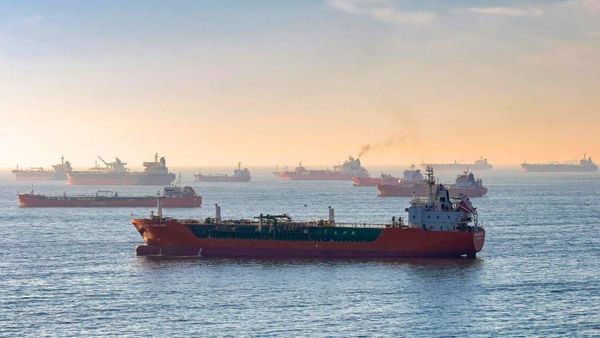
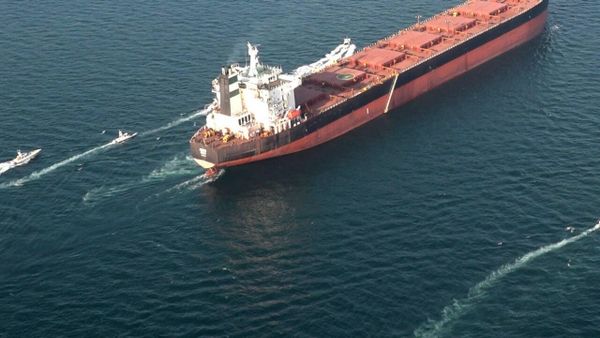
Key signal: Brent strength versus WTI alongside event-risk headlines (Iran-focused risk narratives; Black Sea tanker incidents) without confirmed durable supply removal.
🟠 SIGNIFICANT DRIVERS — CONDITIONAL / SUPPORTIVE
These influence prices at the margin or temporarily, but do not override the dominant narrative.
4) U.S. inventory mix and refinery system behavior (products building while crude signals stay noisy)
- Category: Stocks | Refining
- Mechanism: High refinery utilization with large gasoline/distillate builds shifts the marginal constraint from crude availability to product storage and crack economics, tempering crude bids even when weekly crude stocks draw; it mostly steers WTI and near-dated structure rather than overturning the global surplus framing.
- Region: U.S.
- Time horizon: Short-term
- Price impact: Neutral
- Character: Conjunctural
Key signal: Refinery runs near the mid-90% range with sizable gasoline and distillate inventory builds in the latest EIA weekly snapshot.
5) OPEC+ policy inertia as a ceiling on “tightness” narratives
- Category: Supply
- Mechanism: By reaffirming a pause (rather than tightening) into the low-demand winter window, OPEC+ reduces the probability of an immediate policy-driven deficit signal; this stabilizes supply expectations and pushes price discovery back onto non-OPEC flows and inventories.
- Region: OPEC+
- Time horizon: Medium-term
- Price impact: Bearish
- Character: Structural
Key signal: Explicit confirmation that Q1 policy remains unchanged, with no fresh tightening impulse.
6) Demand signal softness embedded in “products supplied” and macro-surplus commentary
- Category: Demand
- Mechanism: When end-use demand proxies undershoot prior-year levels, the market’s clearing mechanism shifts toward stock build/structure weakening rather than persistent backwardation, limiting the durability of rally attempts that rely on risk headlines alone.
- Region: OECD-centric demand indicators with global narrative spillover
- Time horizon: Short-term
- Price impact: Bearish
- Character: Conjunctural
Key signal: Total products supplied running below the same period last year in the latest weekly data context.
🟡 SECONDARY DRIVERS — AMPLIFIERS / NOISE
These affect volatility, timing, or regional distortions, but rarely direction.
8) Positioning and concentration effects (rallies/sell-offs amplified by flows)
- Category: Finance
- Mechanism: Changes in managed-money exposure and trader concentration can accelerate short-term moves and widen intraday ranges, but they typically follow the dominant balance narrative; positioning affects speed and convexity more than direction when the structural frame is surplus.
- Region: ICE Brent / NYMEX WTI paper markets
- Time horizon: Short-term
- Price impact: Neutral
- Character: Temporary
Key signal: Reported increases in long exposure in the latest positioning window alongside visible CFTC reporting for early January.
9) Event-driven logistics risk (Black Sea incidents; pipeline-export fragility headlines)
- Category: Logistics
- Mechanism: Discrete attacks/incidents can momentarily re-price freight, loading schedules, and regional availability, but absent sustained throughput loss they fade into volatility rather than rebalancing the global barrel ledger.
- Region: Black Sea / CPC-linked Kazakh export chain
- Time horizon: Short-term
- Price impact: Bullish
- Character: Temporary
Key signal: Drone-related tanker incidents reported alongside constrained Kazakh flows via Russia-linked export routes.
Bottom line:
The dominant narrative remains surplus-framed: incremental barrels (including headline Venezuela normalization) keep inventory trajectory and benchmark differentials as the main clearing mechanism, while geopolitics mostly expresses as a Brent-specific risk premium.
Rallies persist only when risk headlines temporarily dominate, but they fade when physical evidence points back to stock build/product saturation and unchanged producer policy.
A narrative shift requires a sustained, verified physical tightening signal (durable export disruption, policy tightening that removes barrels, or a clear demand re-acceleration visible in products supplied and structure), not just episodic event risk.
This analysis captures the visible drivers of oil prices. What it only touches on are the less observable dynamics: physical flow reallocations, Atlantic–Asia arbitrage shifts, freight-rate signals, crack-spread leading indicators, and conditional scenario analysis.
A deeper version of this analysis — including full scenario mapping and structural implications — is available in the "Deep-dive oil market analysis", designed for professionals who want to go beyond headlines. Sources: Reuters; Bloomberg; Financial Times; Wall Street Journal; U.S. EIA Weekly Petroleum Status Report; IEA Oil Market Report.
Sources: Reuters; Bloomberg; Financial Times; Wall Street Journal; U.S. EIA Weekly Petroleum Status Report; IEA Oil Market Report.