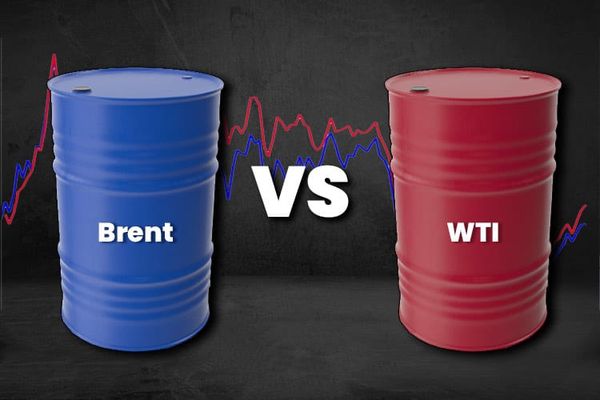
Brent & WTI — Market drivers | H1 April 2026 (EN)
Over the past 15 days, oil prices have been shaped less by headline supply changes than by a deeper question: can marginal barrels still reach the market efficiently, safely, and at acceptable cost?
This piece looks beyond the noise to identify the true price-setting forces behind Brent and WTI, separating structural drivers from temporary distortions and showing why deliverability, spare replacement capacity, and market structure have mattered more than conventional supply-demand headlines.
This post applies a systematic macro-energy framework used by professional oil market analysts to explain what actually moved prices — not what made headlines.
It focuses on physical fundamentals, financial and geopolitical effects, and crucially mechanisms, timing, and price impact.
🔴 MAJEURS — STRUCTURELS / DOMINANTS
Ce sont les forces qui fixent les prix. Si elles changent, le récit change.
1) Gulf deliverability shock through Hormuz
- Category: Geopolitics | Logistics
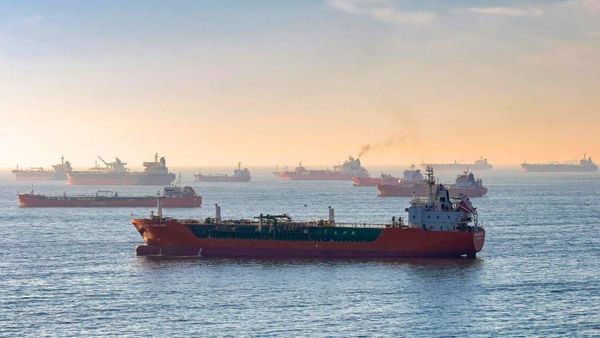
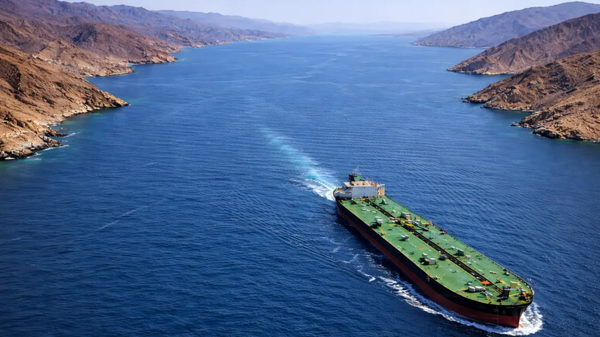
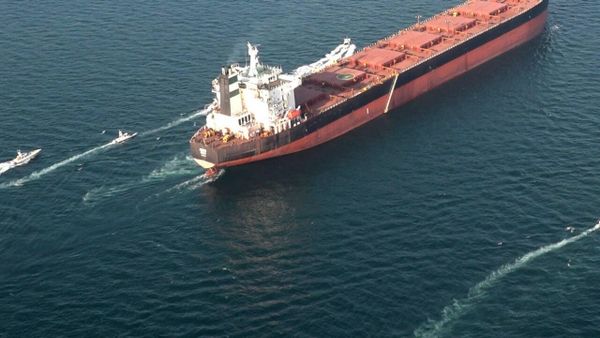
- Mechanism: Over the last 15 days, Brent and WTI were repriced on delivered availability rather than headline production because the Strait of Hormuz remains the critical export chokepoint for Gulf crude and products. Nearly 20 mb/d of oil normally transits the Strait, while bypass capacity is only about 3.5-5.5 mb/d, so the market has been forced to price physical access, insurance availability, vessel willingness, and rerouting limits rather than nominal upstream capacity. That is why de-escalation headlines have produced corrections, but not a durable bearish reset as long as transit remains impaired.
- Region: Persian Gulf with global benchmark transmission
- Time horizon: Short-term
- Price impact: Bullish
- Character: Conjunctural
Key signal: IEA estimates roughly 19.9 mb/d normally moves through Hormuz, with only limited alternative pipeline capacity, while Brent was above $115/b and WTI above $102/b by March 29-30 as the market continued to price disrupted flows.
2) Weak replacement elasticity from OPEC+ and U.S. shale
- Category: Supply
- Mechanism: The second price-setting force is that the system has not shown enough flexible replacement supply to neutralize the Gulf outage risk. OPEC+ agreed only a modest 206 kb/d increase for April, which is immaterial against a chokepoint handling around one-fifth of global oil transit, and Reuters reported that even Saudi and UAE barrels face export constraints while shipping is impaired. On the non-OPEC side, EIA expects higher U.S. output later, but the response is lagged; Dallas Fed survey evidence shows activity rose while production stayed broadly steady because volatility is preventing a rapid drilling response, and Baker Hughes data show U.S. rigs fell again last week.
- Region: OPEC+ core Gulf producers and U.S. shale
- Time horizon: Short-term / Medium-term
- Price impact: Bullish
- Character: Structural
Key signal: OPEC+’s April increase is just 206 kb/d, or less than 0.2% of global supply; Dallas Fed said half of executives kept 2026 drilling plans unchanged; U.S. oil rigs fell to 409.
🟠 SIGNIFICATIFS — CONDITIONNELS / DE SOUTIEN
Ils influencent les prix à la marge ou temporairement, sans renverser le narratif dominant.
3) Emergency stock releases and inventory buffers
- Category: Stocks
- Mechanism: Emergency reserves and commercial inventories have capped the severity of the squeeze, but they have not overturned it because stocks can cushion lost barrels only temporarily and do not restore Gulf transit. The IEA’s 400 mb release and the fact that global observed oil stocks were above 8.2 billion barrels provide a real buffer, while U.S. commercial crude inventories rose by 6.9 million barrels in the latest weekly data. This fails to overpower the major drivers because the core problem remains maritime access and shipping protection, not merely the absolute volume of oil in storage.
- Region: OECD and global
- Time horizon: Short-term
- Price impact: Bearish
- Character: Temporary
Key signal: The IEA called the 400 mb release a “stop-gap measure,” and EIA still showed distillate inventories slightly below the five-year average even as crude stocks built.
4) Product-market tightness and refinery feedstock stress
- Category: Refining
- Mechanism: Diesel, jet and naphtha tightness have reinforced crude prices because refiners are not simply facing expensive crude; they are facing uncertain access to the right feedstocks at the right time. Reuters reported that Singapore complex margins jumped to nearly $30/b, jet fuel margins exceeded $52/b, and 10ppm gasoil cracks moved above $48/b as Middle East crude and feedstocks became logjammed. This fails to overpower the major drivers because it is not an independent narrative; it is the downstream expression of the same Gulf deliverability shock.
- Region: Asia with spillover into global product pricing
- Time horizon: Short-term
- Price impact: Bullish
- Character: Conjunctural
Key signal: Reuters cited refiners saying replacement crude from outside the region would take one to two months to arrive.
5) Macro slowdown, firmer dollar and tighter rates expectations
- Category: Demand | Macro | Finance
- Mechanism: The oil shock has started to weaken growth expectations and tighten financial conditions, which should normally lean bearish for crude by eroding demand. Reuters reported the OECD cut its 2026 global growth forecast to 2.9%, euro zone PMI slipped to 50.5, and markets began pricing less monetary easing as higher energy prices fed inflation pressure and supported the dollar. This fails to overpower the major drivers because demand destruction develops more slowly than a physical transit shock, so macro drag is moderating the upside rather than resetting the price regime.
- Region: Global
- Time horizon: Medium-term
- Price impact: Bearish
- Character: Conjunctural
Key signal: The market is now balancing slower growth against an immediate shipping choke on Gulf supply, and the second effect has dominated.
🟡 SECONDARY DRIVERS — AMPLIFIERS / NOISE
These affect volatility, timing, or regional distortions, but rarely direction.
6) Options convexity and thinner market liquidity
- Category: Finance
- Mechanism: Derivatives positioning has amplified day-to-day moves, but it is following the physical stress rather than creating it. Reuters reported open interest in Brent $150 April-end calls rose to 28,941 lots from 3,374 a month earlier, while broader cross-asset liquidity worsened and bid-ask spreads widened.
- Region: ICE Brent and global macro markets
- Time horizon: Short-term
- Price impact: Bullish
- Character: Temporary
Key signal: Upside call interest expanded far faster than downside protection, showing tail-risk hedging rather than a new fundamental driver.
7) De-escalation headlines and policy signals
- Category: Geopolitics | Finance
- Mechanism: Diplomatic headlines have repeatedly caused sharp intraday or one-day sell-offs, but these moves have faded when physical flows did not normalize. Brent and WTI fell sharply on March 23 after military strikes were postponed and softened again on March 24 as Iran considered a U.S. proposal, yet prices rebounded once the shipping constraint remained unresolved.
- Region: Global
- Time horizon: Short-term
- Price impact: Neutral
- Character: Temporary
Key signal: Brent briefly dropped about 15% on March 23 and then returned above $115 by March 29-30.
8) Rerouting, ton-mile inflation and port disruption
- Category: Logistics
- Mechanism: Rerouting is raising the delivered cost of non-Gulf replacement barrels by lengthening voyages, forcing partial loading, and shifting flows into less efficient routes. Reuters reported U.S. Gulf crude is moving to Asia via the Panama Canal on Aframax and Suezmax vessels at high charter costs, while insurance support measures and isolated port disruptions such as Salalah underline that vessel availability and terminal continuity now matter more than headline supply totals.
- Region: Atlantic-Pacific arbitrage and Gulf-adjacent ports
- Time horizon: Short-term
- Price impact: Bullish
- Character: Temporary
Key signal: One U.S. Gulf-to-Korea Suezmax via Panama was booked at about $16 million, and another Gulf-to-Japan movement at about $14 million, underscoring higher ton-mile and freight costs for replacement barrels.
Bottom line:
The dominant narrative over the last 15 days has been a deliverability shock: oil has been priced on whether Gulf barrels can physically and safely reach end-markets, not on paper supply alone.
Rallies have persisted because emergency stocks, small OPEC+ increases and weaker macro data do not reopen Hormuz or fully replace trapped Gulf flows, while sell-offs have failed when de-escalation headlines did not restore marine traffic, insurance and export normality.
The narrative shifts only if sustained transit through Hormuz resumes with credible shipping protection, or if the market sees a clearly larger and actually deliverable supply response than the current one.
Source: Reuters; International Energy Agency (IEA); U.S. Energy Information Administration (EIA); Federal Reserve Bank of Dallas.
This analysis captures the visible drivers of oil prices. What it only touches on are the less observable dynamics: physical flow reallocations, Atlantic–Asia arbitrage shifts, freight-rate signals, crack-spread leading indicators, and conditional scenario analysis.
A deeper version of this analysis — including full scenario mapping and structural implications — is available in the "Deep-dive oil market analysis", designed for professionals who want to go beyond headlines. Sources: Reuters; Bloomberg; Financial Times; Wall Street Journal; U.S. EIA Weekly Petroleum Status Report; IEA Oil Market Report.